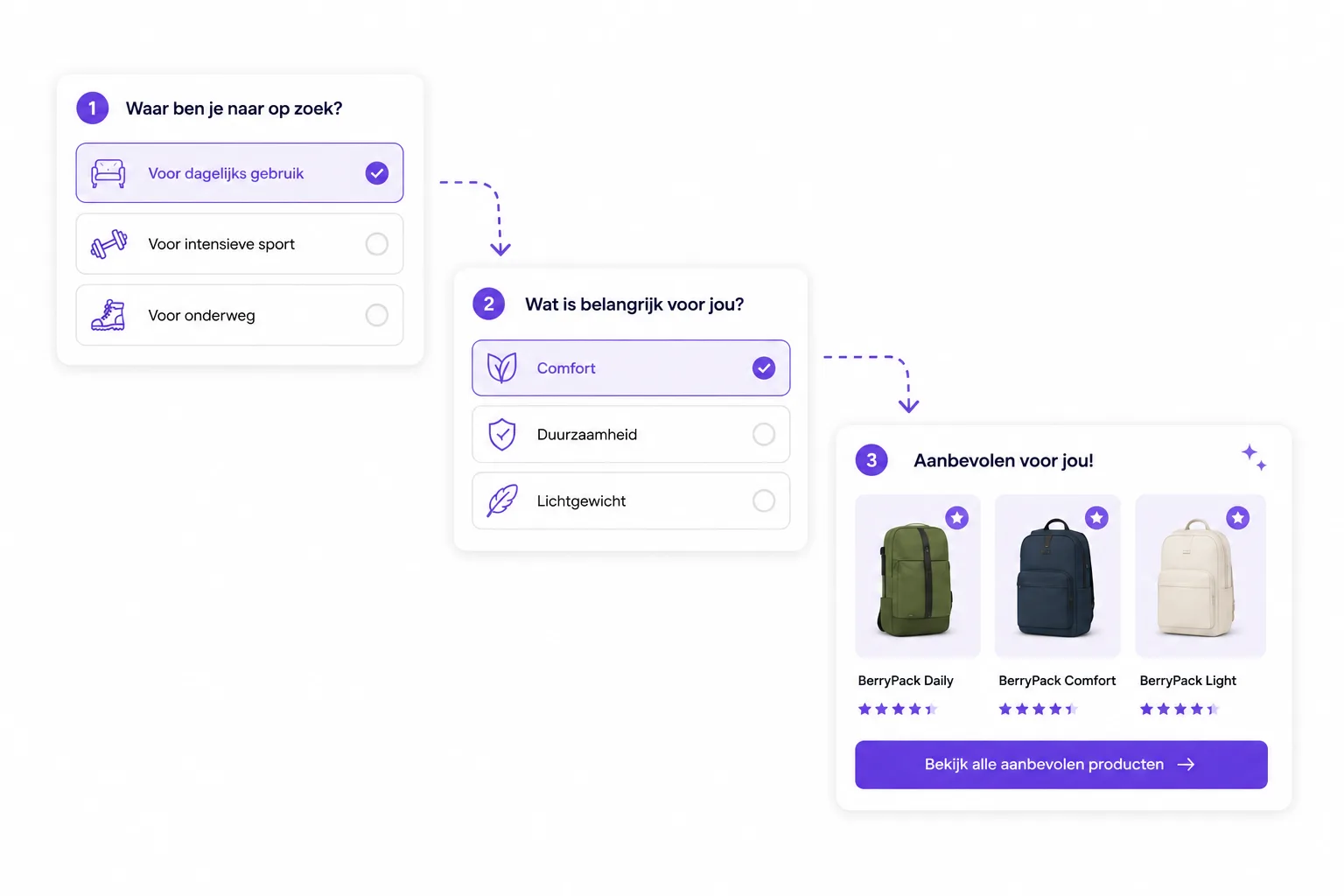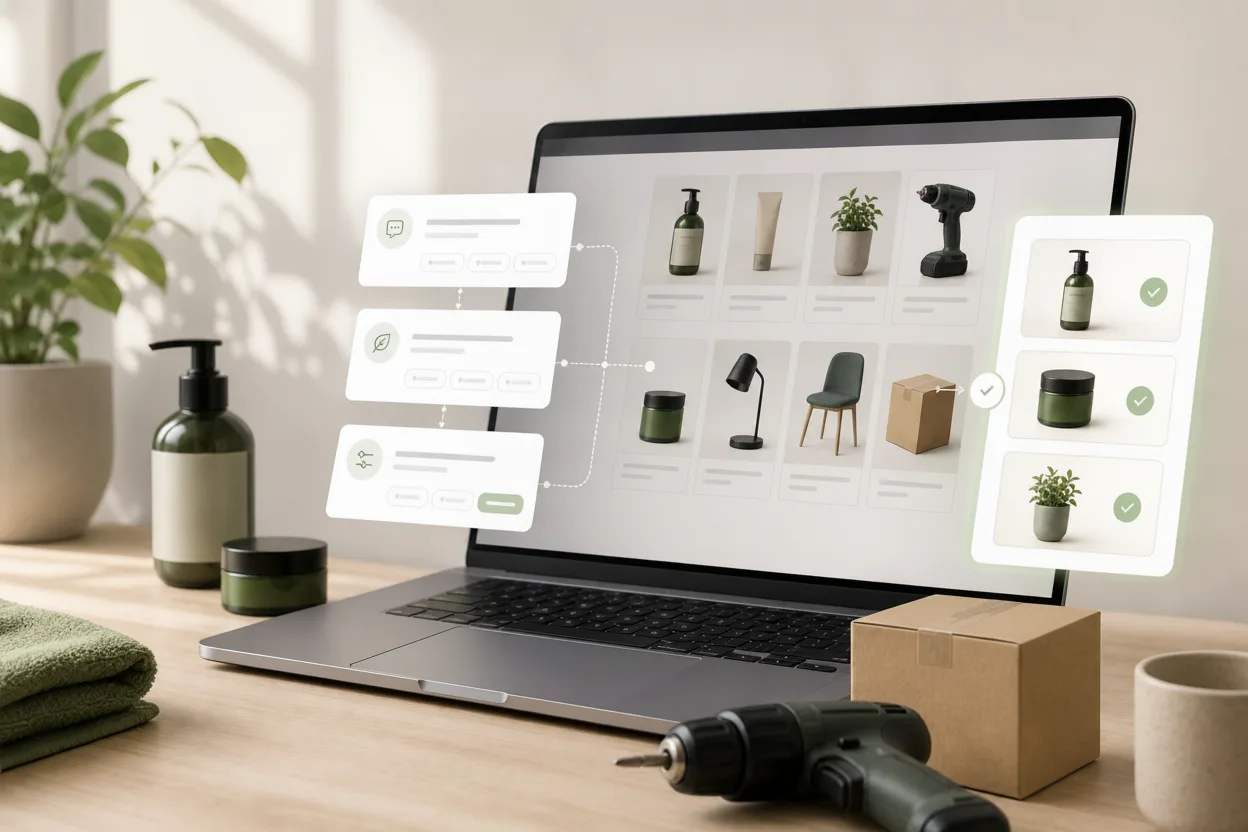

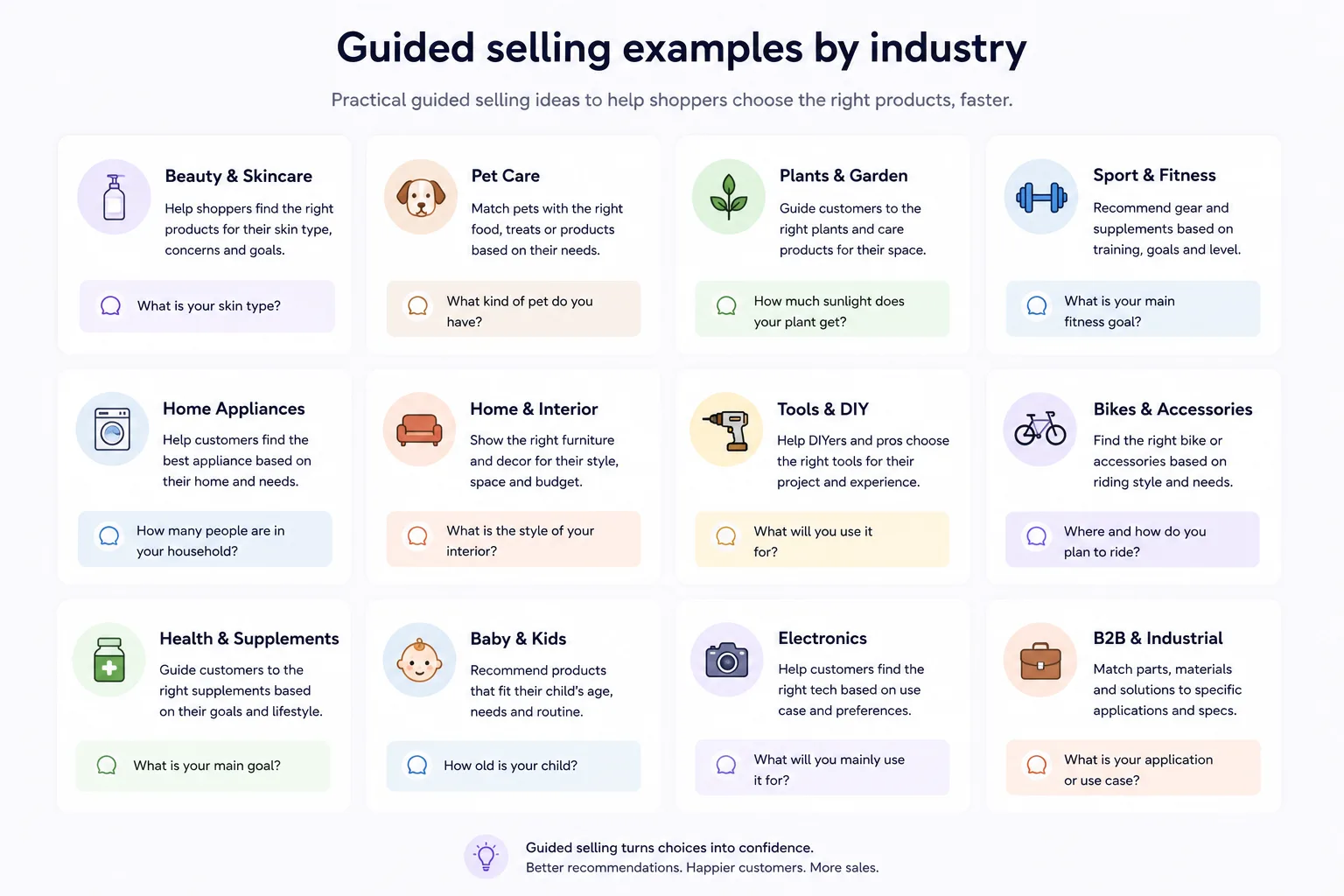
Guided selling becomes much easier to understand when you place it next to a real product range. An advice flow for skincare is different from one for laptop accessories, cycling gear or technical spare parts. Still, the foundation is the same: ask a few focused questions, connect the answers to product data and give product advice that feels clear.
For ecommerce owners, that matters because many visitors do not get stuck at checkout. They get stuck much earlier. They are unsure about material, use case, size, skin type, compatibility, style or budget. A Flow widget can turn that hesitation into a smaller and more relevant product selection.
Below are practical guided selling examples by industry. Use them as starting points, not fixed templates. The best flow always reflects your own catalog and the questions your customers already ask.
What do 8 guided selling examples look like?
| Use case | Start with this shopper question | Useful product data |
|---|---|---|
| Car care | What do you want to clean or protect? | Surface, cleaning strength, application |
| Beauty | What does your skin need? | Skin type, texture, ingredients, routine |
| Supplements | What is your practical goal or preference? | Ingredients, format, allergens, dietary fit |
| Pet products | Which animal and life stage are you shopping for? | Species, age, size, activity, sensitivities |
| Sports | What are you training for? | Sport, level, frequency, fit, surface |
| Electronics | Which device or setup must this work with? | Connector, protocol, wattage, compatibility |
| Interiors | What should fit the room and daily use? | Dimensions, material, style, maintenance |
| Technical B2B | Which application or part must be matched? | Dimensions, standards, capacity, connection |
Why industry examples help
A strong advice flow starts with the question in the shopper's mind. That question is different in every industry.
In beauty, the question is often: "Will this suit my skin?" In electronics: "Will this work with my device?" In interior products: "Will this fit my room and style?" In B2B or technical assortments: "Is this part right for my situation?"
Thinking by industry helps you avoid a generic quiz. Instead, you create product advice that supports real buying decisions.
How can guided selling recommend car care products?
Car care is a useful example because shoppers can easily feel unsure. Many products look similar, but they are made for different surfaces, levels of dirt and maintenance steps.
Possible advice flow
A car care advice flow can start by asking what the visitor wants to clean, restore or protect:
- paint;
- wheels;
- interior;
- leather;
- plastic;
- glass;
- engine bay.
Follow-up questions can cover the problem or product goal, such as light dirt, stubborn brake dust, dull paint, stains, regular maintenance or long-lasting protection.
Product advice that builds trust
The result should not only show a product. It should explain why it is a safe fit. For example: "Suitable for coated wheels" or "Mild enough for regular maintenance."
Good matching can use product data such as surface, cleaning strength, pH level, protection time, application method and required accessories. A Flow widget can also recommend bundles, such as shampoo with a wash mitt, wheel cleaner with a brush, or leather cleaner with conditioner.
How does guided selling work for beauty and skincare?
Beauty and skincare are naturally advice-driven. Shoppers want to know what suits their skin and are careful about choosing the wrong product.
Possible advice flow
Start with the shopper's goal rather than the product category:
- hydration;
- blemish control;
- glow;
- anti-aging;
- calming sensitive skin;
- building a simple routine.
Then ask about skin type, sensitivity, current routine and preferences such as fragrance-free, vegan or lightweight texture.
Product advice that feels human
In beauty, tone matters. The advice should feel calm and helpful, without sounding medical or making exaggerated promises. A good result might say: "This moisturizer fits dry skin and has a richer texture for evening use."
Use product data for skin type, active ingredients, texture, use moment, sensitivity and routine combinations. It is also helpful to show alternatives, such as a lighter daytime option or a beginner-friendly product for shoppers who want to start gently.
How can guided selling support supplement choices?
Supplement ranges combine formats, ingredients, dietary preferences and usage instructions that can be difficult to compare. Guided selling can organize those product facts without turning the recommendation into a medical diagnosis or promise.
Possible advice flow
Start with a practical shopping goal, such as building a simple routine, choosing a preferred format or finding products that fit dietary preferences. Follow-up questions can cover capsules versus powder, vegan suitability, allergens, flavor, frequency and budget.
Product advice with clear boundaries
Match on structured facts such as ingredients, format, serving information, dietary suitability and declared allergens. Explain what the product contains and how it fits the stated preference. For medical conditions, medication or safety concerns, direct the shopper to qualified professional advice instead of making the flow decide.
How can guided selling help pet owners choose?
Pet stores often have many products that differ by animal, life stage, size, activity and practical use. A shopper may know the situation but not the product terminology.
Possible advice flow
Begin with the animal and the purchase goal: daily food, treats, grooming, enrichment, travel or sleep. Then ask about age, size, activity, indoor or outdoor use, material preference and any clearly declared sensitivity.
Product advice that stays practical
Useful product data includes species, life stage, dimensions, material, activity level, ingredients and care instructions. The recommendation can explain practical fit, such as size or use case. Health symptoms and treatment questions should be routed to a veterinarian rather than handled as a product match.
How can a guided selling flow help sports shoppers?
Sports ecommerce often has many products that look similar at first glance. Think of running shoes, cycling clothing, fitness equipment, rackets, helmets or recovery products.
Possible advice flow
A sports advice flow can begin with the shopper's goal:
- start a new sport;
- improve performance;
- reduce discomfort;
- train for a distance;
- move more comfortably;
- replace current gear.
Relevant follow-up questions can cover level, training frequency, surface, body fit, weather, support needs and budget.
Product advice based on real use
Sports product advice is strongest when it names the use case. For example: "Suitable for three runs per week on paved roads" or "More cushioning for longer distances."
Product data can include sport type, intensity, size, cushioning, support, weather, material and experience level. For apparel, the Flow widget can also support size guidance or layering, such as base layer, insulation and rain protection.
How does guided selling prevent electronics compatibility mistakes?
Electronics can be technical, but shoppers usually think in everyday questions: "Will this fit my laptop?" "Is this fast enough?" "Which cable do I need?" An advice flow can translate those questions into clear product matching.
Possible advice flow
Start with the device or situation:
- laptop or desktop;
- smartphone or tablet;
- gaming;
- remote work;
- photography;
- smart home;
- charging and cables.
Follow-up questions can cover brand, connector type, power, storage, screen size, speed or required feature.
Product advice that prevents wrong purchases
For electronics, preventing mismatches is important. A recommendation should explain why something is compatible. For example: "Works with USB-C laptops that support Power Delivery" or "Suitable for 4K at 60 Hz."
Use product data such as connector, protocol, wattage, capacity, size, compatibility, generation and included accessories. When useful, explain what does not fit as well. That can reduce returns and support questions.
How does guided selling combine interior style and fit?
Interior products have an emotional side, but also clear practical constraints. A sofa, lamp, rug or cabinet needs to look good and work in the room.
Possible advice flow
An interior advice flow can ask about:
- room;
- style;
- color preference;
- dimensions;
- household situation;
- maintenance;
- material;
- budget.
For lighting, ask about atmosphere, task lighting, ceiling height and dimming. For furniture, ask about available space, daily use and material preference.
Product advice with context
Good interior product advice helps shoppers imagine why an item fits. For example: "This lamp works well above a dining table from 160 to 200 cm" or "This fabric is practical for heavy daily use."
Use product data such as style, color, material, dimensions, maintenance, room, light temperature, mounting and delivery time. A Flow widget can also show alternatives by style: calm, bold or practical.
How does guided selling work for B2B and technical catalogs?
B2B webshops and technical assortments often contain many variants, codes and specifications. Some customers know exactly what they need, but many need help finding the right product rule or compatible part.
Possible advice flow
A technical advice flow can start with the application:
- replacing a part;
- new installation;
- maintenance;
- safety;
- compatibility check;
- finding the right size or capacity.
Follow-up questions can cover environment, dimensions, load, connection, material, certification or existing system.
Product advice that reduces support load
Here, product advice is mainly about certainty. A result should briefly explain why a part or product fits. For example: "Suitable for outdoor use and compatible with this connection size."
Product data can include SKU, material, dimensions, tolerances, standards, capacity, connection type, temperature, pressure, voltage or machine compatibility. A Flow widget can also narrow the catalog to only relevant variants, so customers do not have to work through dozens of filters.
How to choose your first industry flow
Start with the category where hesitation costs the most. That is not always your biggest category. It is often the category with many similar products, frequent support questions or avoidable returns.
Good signals include:
- visitors use many filters but click few products;
- support receives the same advice questions again and again;
- products have many variants or specifications;
- returns happen because of size, use case or expectation mismatch;
- campaigns send visitors to a broad category page.
Then build a small first version. Three to six questions are often enough to see whether shoppers use the route and whether the product advice feels right.
Practical structure for an advice flow
A useful structure is:
- Ask about the goal or problem.
- Ask about the main constraint, such as size, skin type, device, room or application.
- Ask about preferences that influence ranking, such as budget, style, intensity or material.
- Show a best match with a clear explanation.
- Show two or three alternatives when price, style or availability may differ.
Keep the questions simple. Use the words customers use in search queries, reviews and support messages. Internal product terminology should be translated into plain language.
Common mistakes
An advice flow becomes weaker when it tries to do too much. The most common mistake is turning every product attribute into a question. Then the flow starts to feel like a long filter list.
Watch for these points:
- do not ask questions that do not change the recommendation;
- do not start with technical terms;
- do not show too many products in the result;
- always explain why a product fits;
- test the Flow widget on mobile;
- improve the flow based on drop-off and product clicks.
FAQ
Which industries are best suited for guided selling?
Guided selling works especially well for assortments where customers compare, hesitate or need advice. Examples include beauty, car care, sports, electronics, interior products, supplements, pet products and technical B2B products.
How many questions should an advice flow have?
For a first version, three to six questions are usually enough. Start with the questions that truly change the recommendation. You can expand later when analytics or customer questions show that something is missing.
Where should I place the Flow widget?
Place the Flow widget where hesitation appears. That can be a category page, product page, advice page, campaign page or landing page. For technical products, a product check on the product page can work especially well.
Should product advice always link to a product page?
Usually, yes. The advice helps the shopper choose, but the product page still matters for price, stock, details and checkout. Make the click feel logical by explaining why the product fits before sending the visitor onward.
Start with one category where shoppers hesitate
Guided selling does not need to start big. Choose one industry or product group where customers already need advice. Build a short advice flow, connect the most important product data and publish the Flow widget where visitors get stuck.
See how guided selling software for ecommerce connects questions, data and recommendations, compare the boundary with B2B guided selling and CPQ, or try the live ecommerce example.
With BerryPath, you can move from questions to explainable product advice without rebuilding your entire webshop. Start small, learn from real behavior and improve the advice step by step.