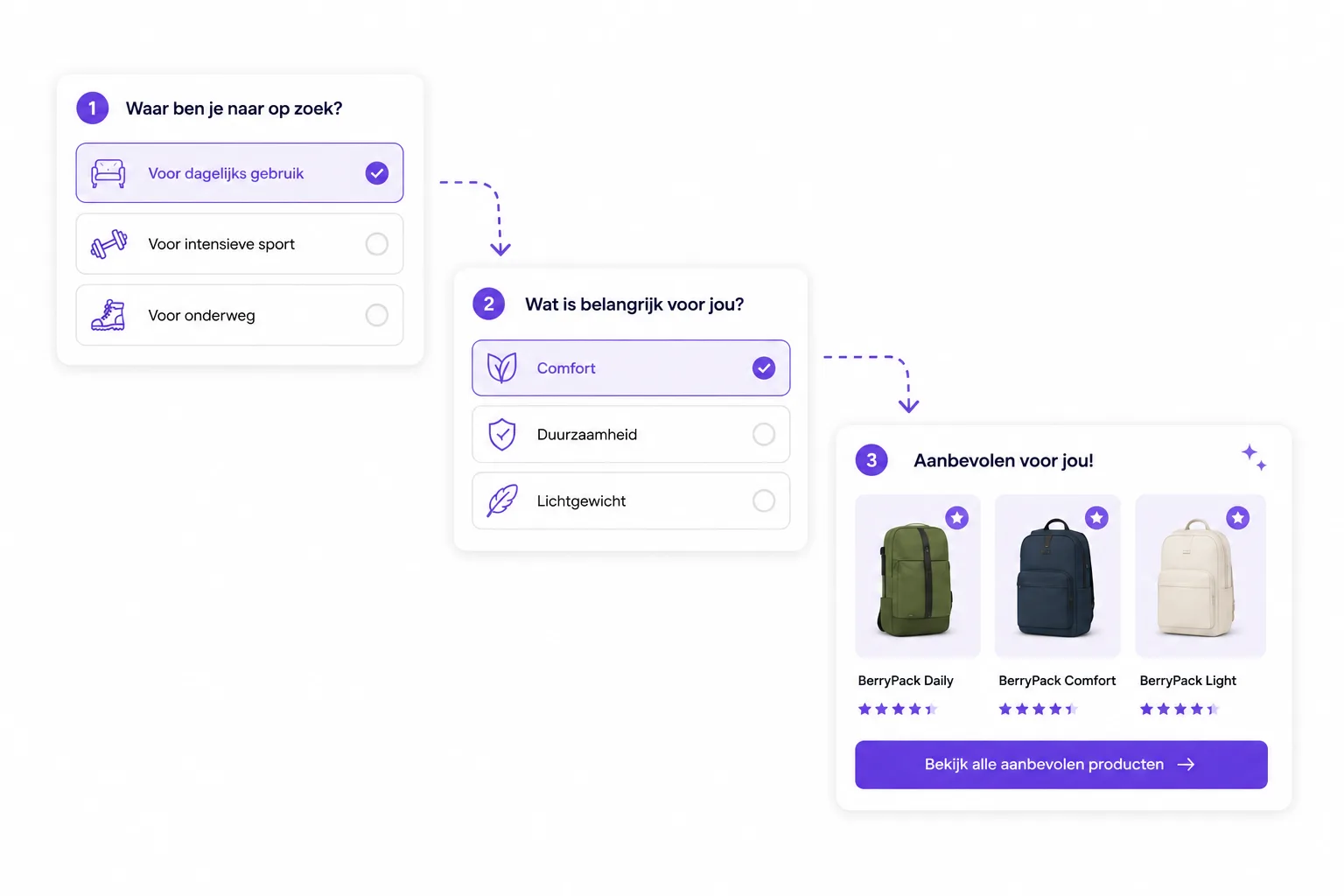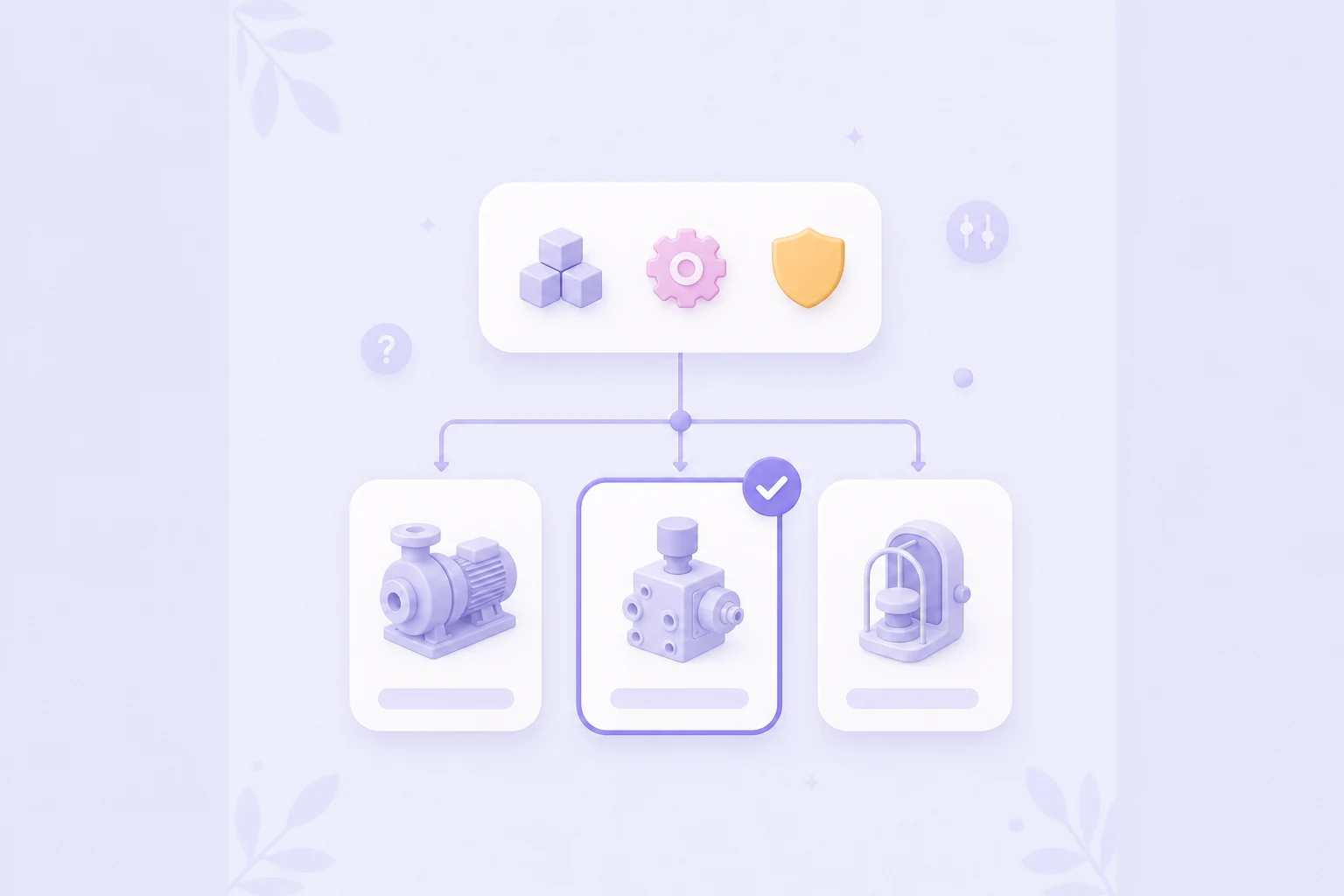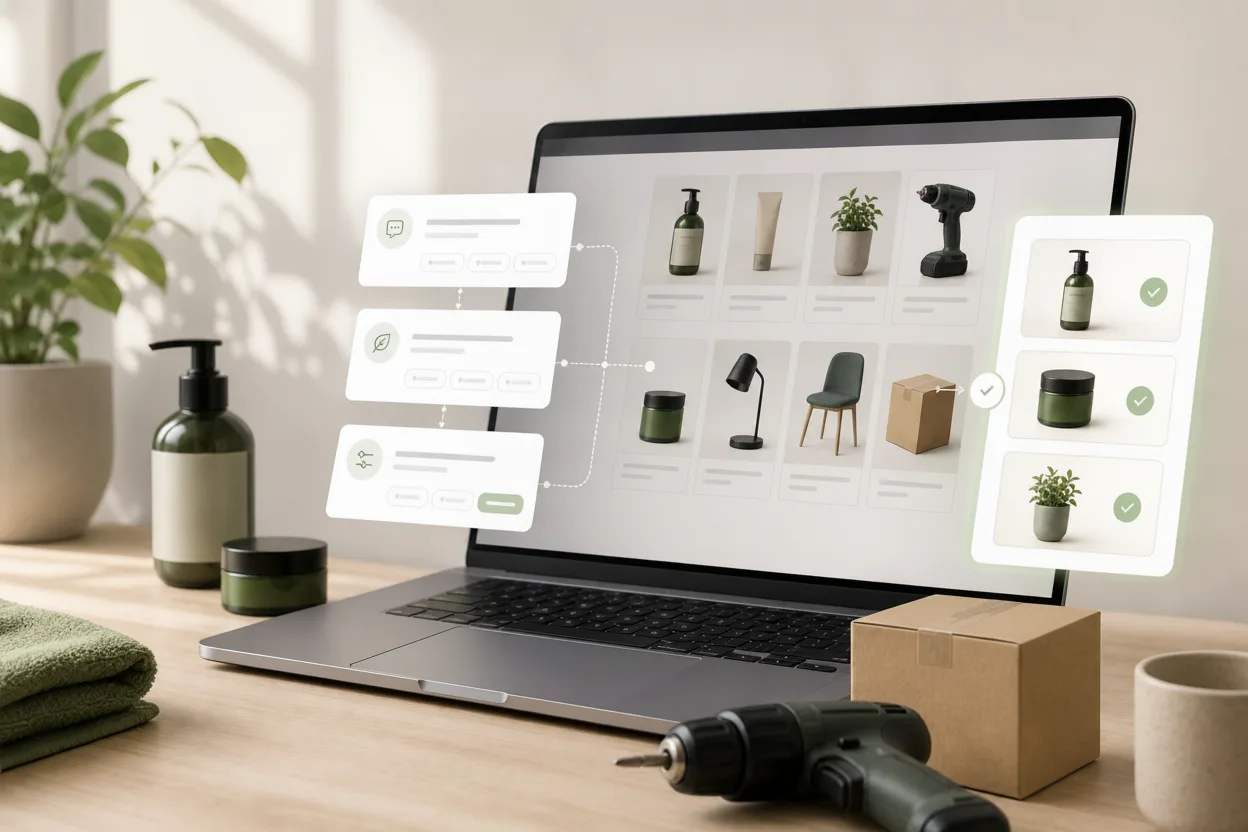

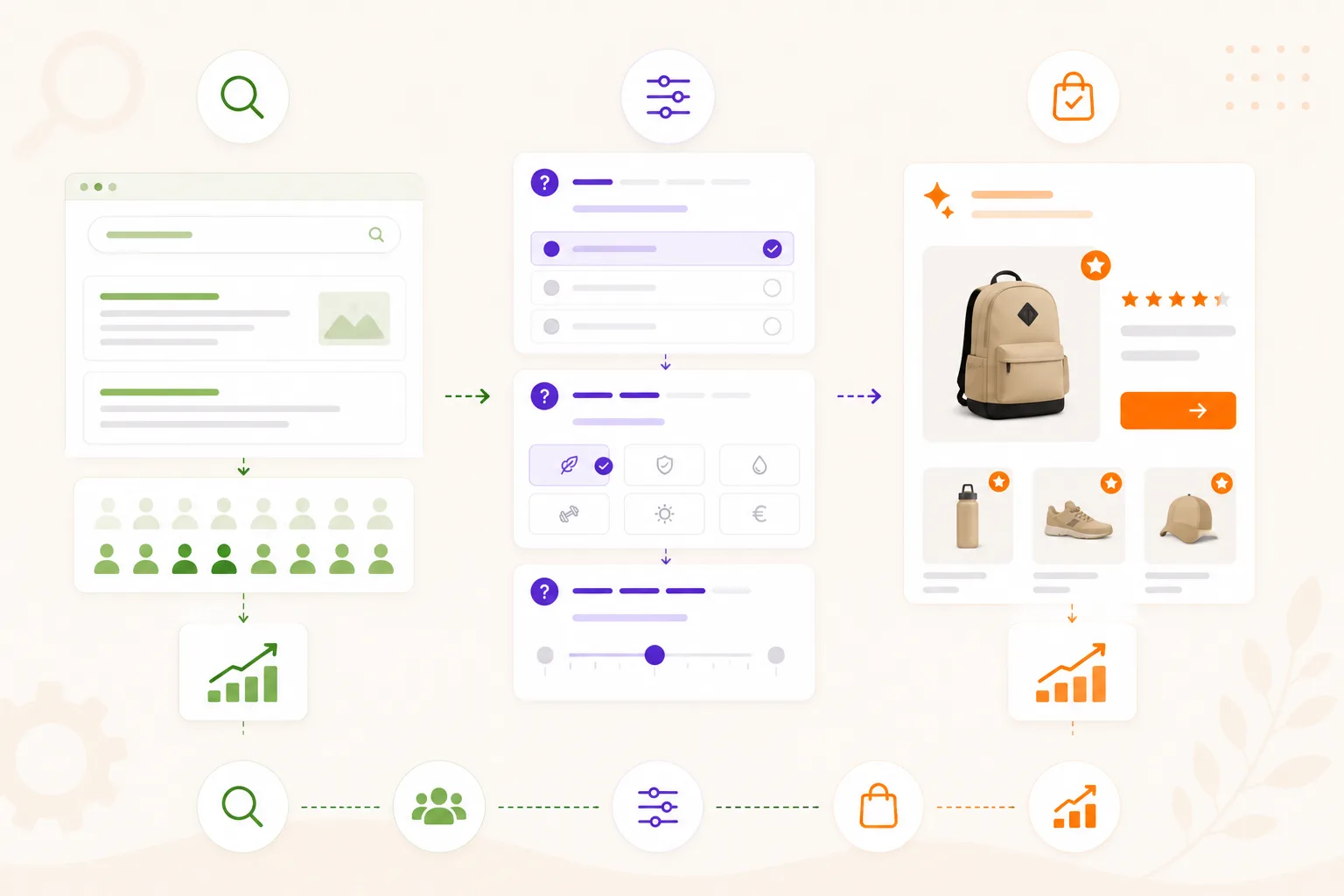
SEO brings visitors to your webshop. Guided selling helps them choose once they arrive.
Those are different jobs, but they support each other. A useful product advisor can reduce choice stress, answer buying questions and turn broad informational traffic into better product clicks.
The key is to use guided selling as part of the page experience, not as a replacement for helpful content.
SEO answers the search, guided selling handles the decision
Many ecommerce searches start with a problem:
- best cleaner for matte paint;
- which supplement for beginners;
- dog food for sensitive stomach;
- plant for low light room;
- helmet for commuting;
- compatible part for model X.
Content can explain the category. A product advisor can turn that explanation into a recommendation.
That flow feels natural: the page teaches, the widget asks a few questions, and the result points to a product that fits.
Use advice pages for long-tail intent
Guided selling works well on pages built around one buying question. These pages can target long-tail searches and give the visitor a direct next step.
Examples:
- "Which car shampoo do I need?"
- "Which plant fits a dark room?"
- "Which bike rack fits my car?"
- "Which protein powder should I choose?"
The page should still contain readable content. Do not hide all information inside the widget. Search engines and visitors both need context.
Do not iframe the whole experience
If the buying guide is important to the page, keep the page itself useful. A lightweight JavaScript Flow widget can add interaction while the surrounding page keeps headings, copy, internal links and product context available.
That matters for maintainability too. Content teams can improve the page. Ecommerce teams can improve the flow. Both parts support the same intent.
Learn from flow answers
A product advisor can reveal the language shoppers use after landing on a page.
Look at:
- most selected goals;
- common constraints;
- questions with high drop-off;
- recommended products;
- product clicks;
- no-match situations.
These insights can feed SEO content. If many visitors choose "safe for coated surfaces", that phrase may deserve a section on the category page. If many people ask about compatibility, add a clearer compatibility block.
Internal links and next steps
Every advice page should have a next step:
- a Flow widget;
- product category links;
- related buying guides;
- product pages;
- support or contact if the choice is complex.
Do not let informational traffic end with a wall of text. Guided selling gives the visitor a practical route from learning to choosing.
Measure beyond rankings
SEO reporting often stops at impressions, clicks and rankings. For guided selling pages, add product-choice metrics:
- starts of the Flow widget;
- completion rate;
- product clicks;
- assisted conversions;
- support questions reduced;
- products with weak matching data.
That shows whether the page is not only attracting traffic, but helping shoppers make decisions.
Better SEO starts with better help
Guided selling is not an SEO trick. It is a way to make useful traffic more useful.
Create pages that explain the buying decision in plain language. Add a product advisor where the visitor needs help applying that information to their own situation. Then use the answers to keep improving the page.
That is how SEO and guided selling work together: one brings people in, the other helps them choose.