
Third-party cookies are disappearing, privacy rules are tightening, and shoppers are more careful about what they share. At the same time, webshops want to advise more personally. That sounds contradictory, but one data source serves both sides: zero-party data.
The twist is that many webshops can already collect this data without tracking or profiling anyone. Not through surveillance, but by simply asking visitors what they are looking for. A product finder is the most natural place to do that.
In this article you will learn what zero-party data is, why it matters now, and how to collect it with a product finder and turn it into better product advice, without harming your visitor's trust.
What is zero-party data?
Zero-party data is information a customer shares intentionally and proactively, such as preferences, intentions, situation and context. You do not have to infer anything from behavior or clicks: the customer tells you directly, usually in exchange for something valuable like a fitting recommendation.
A few examples of zero-party data:
- "I'm looking for a product for my daughter's sensitive skin";
- "My budget is around 80 euros";
- "I'm a beginner and want something low-maintenance";
- "It's a gift, not a purchase for myself".
This is exactly the kind of information a good recommendation depends on, and it is information you can never reliably extract from click behavior.
Zero-party data vs first-, second- and third-party data
The four types of customer data differ mainly in where they come from, how reliable they are and how they relate to privacy:
| Type | Source | Consent | Reliability |
|---|---|---|---|
| Zero-party | Customer shares it on purpose (preferences, intent) | Explicit, given by sharing | Highest — no interpretation needed |
| First-party | Your own site behavior (clicks, views, purchases) | Implied via your terms | Good, but needs interpretation |
| Second-party | Another company's first-party data, via a partnership | Depends on the partner | Variable |
| Third-party | Bought from trackers across the web | Often unclear — disappearing with cookies | Low and fading |
The difference that matters: you do not have to interpret zero-party data. No guesswork about what a visitor meant, because they told you literally. That is why zero-party data is not the same as first-party data: first-party data is behavior you observe, zero-party data is intent the customer states.
Zero-party data examples
Zero-party data is easiest to understand through concrete examples. In an ecommerce context it usually falls into a few groups:
- Intent and situation: "it's a gift", "I'm replacing a broken one", "this is my first purchase".
- Preferences: preferred style, taste, brand, colour or material.
- Requirements: budget range, size, compatibility, allergy or available space.
- Experience level: beginner or advanced, which changes how complex the product should be.
- Use context: how often, where and for whom the product is used.
Each of these is something a customer states directly. None of it can be reliably guessed from clicks — which is exactly why zero-party data is so valuable for product advice.
Why zero-party data matters now
Three developments are converging at once, turning zero-party data from a nice idea into a serious strategy.
The end of the third-party cookie. Browsers and regulation are squeezing out cross-site tracking. The data much personalization relied on is drying up. Webshops built on cookies need a new source.
Stricter privacy expectations. Under GDPR and with increasingly aware consumers, covert tracking no longer works. Zero-party data fits perfectly: the customer consents by simply sharing it themselves, and knows exactly what and why.
AI personalization needs clean input. Smart recommendations are only as good as the data underneath. Vague behavioral signals produce vague advice. Explicit preferences produce sharp advice. Zero-party data is the cleanest fuel you can feed matching and personalization.
Why a product finder is the best way to collect zero-party data
You can collect zero-party data in several ways: preference centers, surveys, account settings. But the most natural and best-converting method in a webshop is an interactive product finder or choice helper.
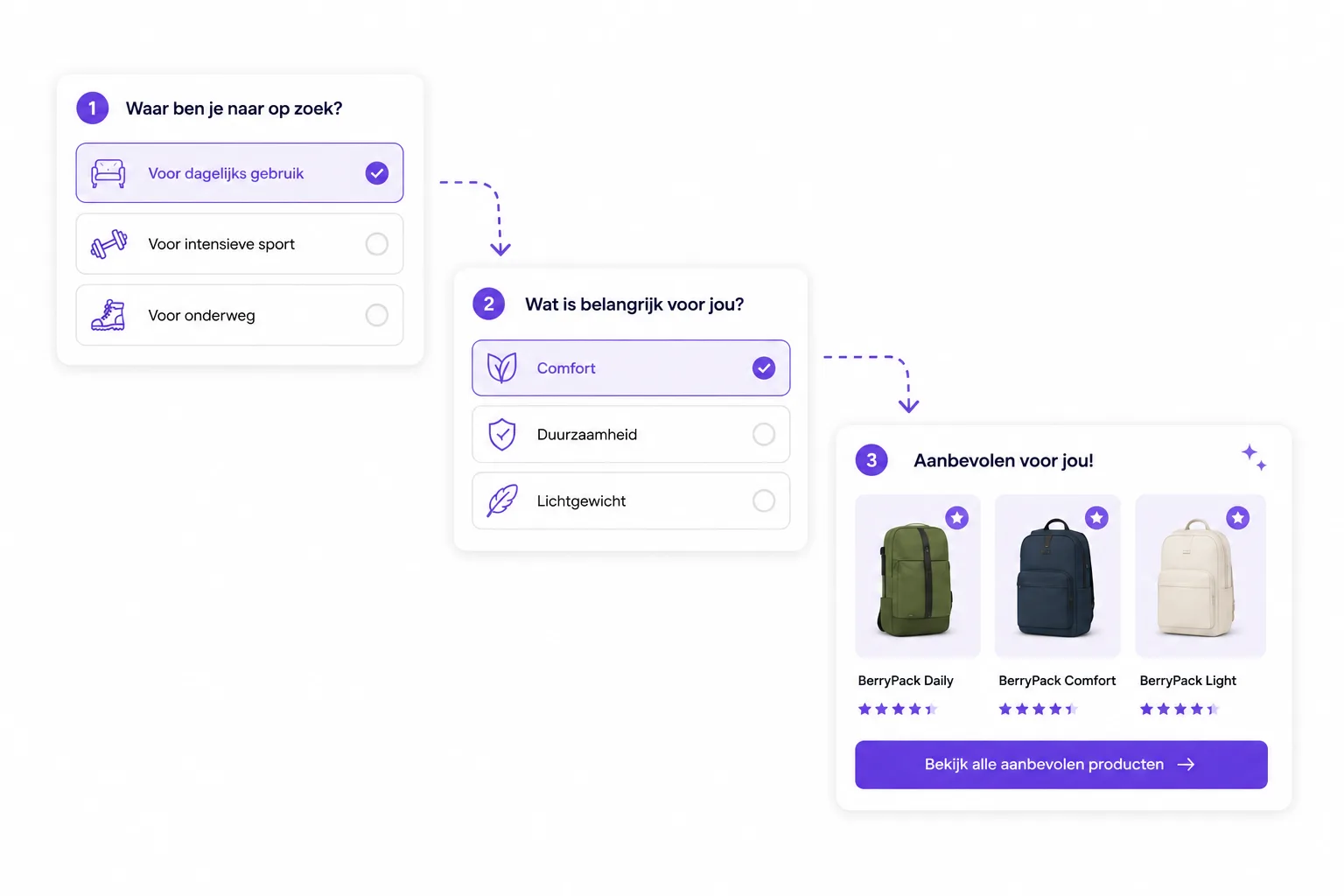
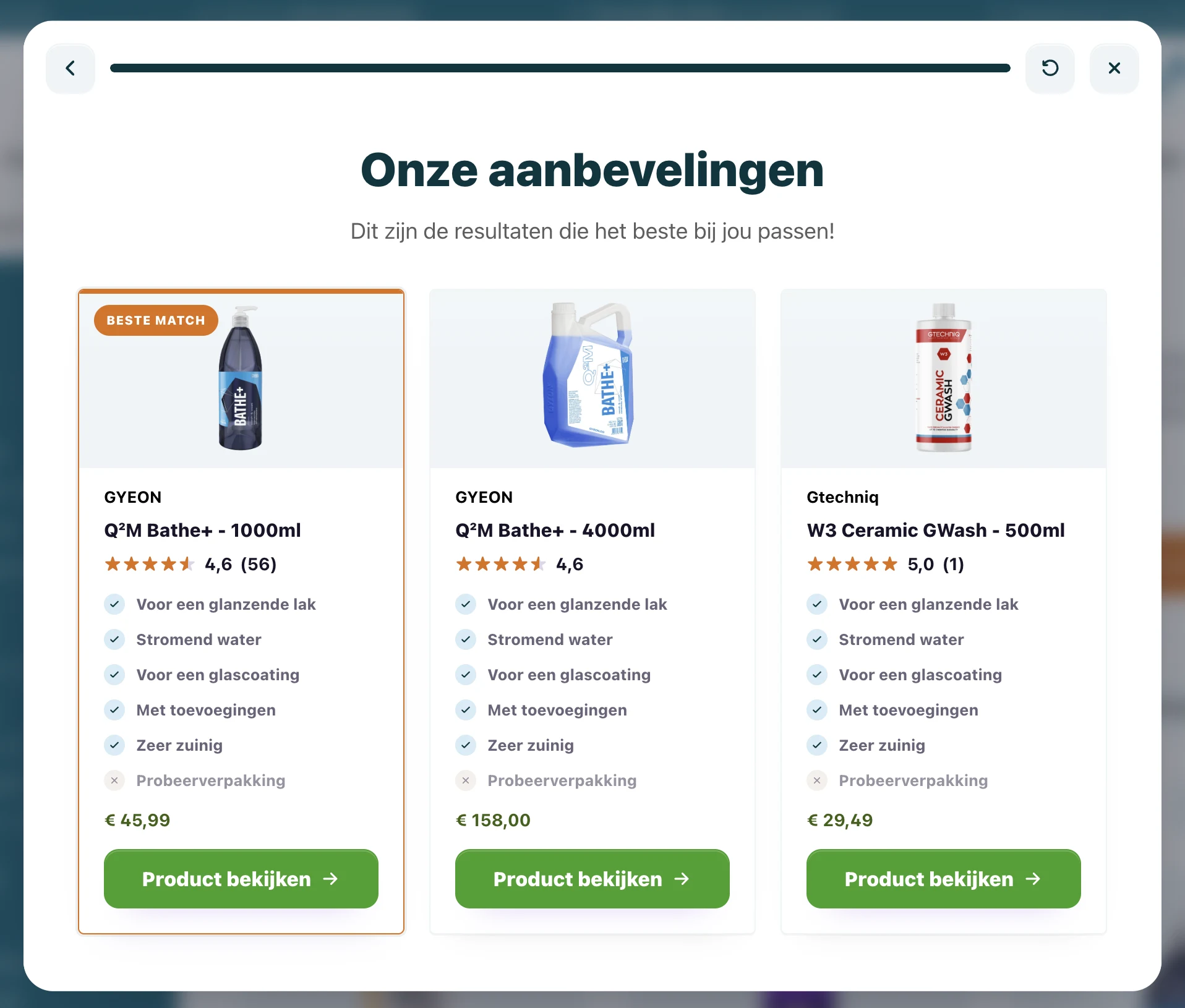
The reason is fair exchange. A visitor answers a few short questions and immediately gets something valuable in return: a fitting product recommendation. Nobody fills in a form for your marketing, but almost everyone happily answers questions that get them to the right product faster.
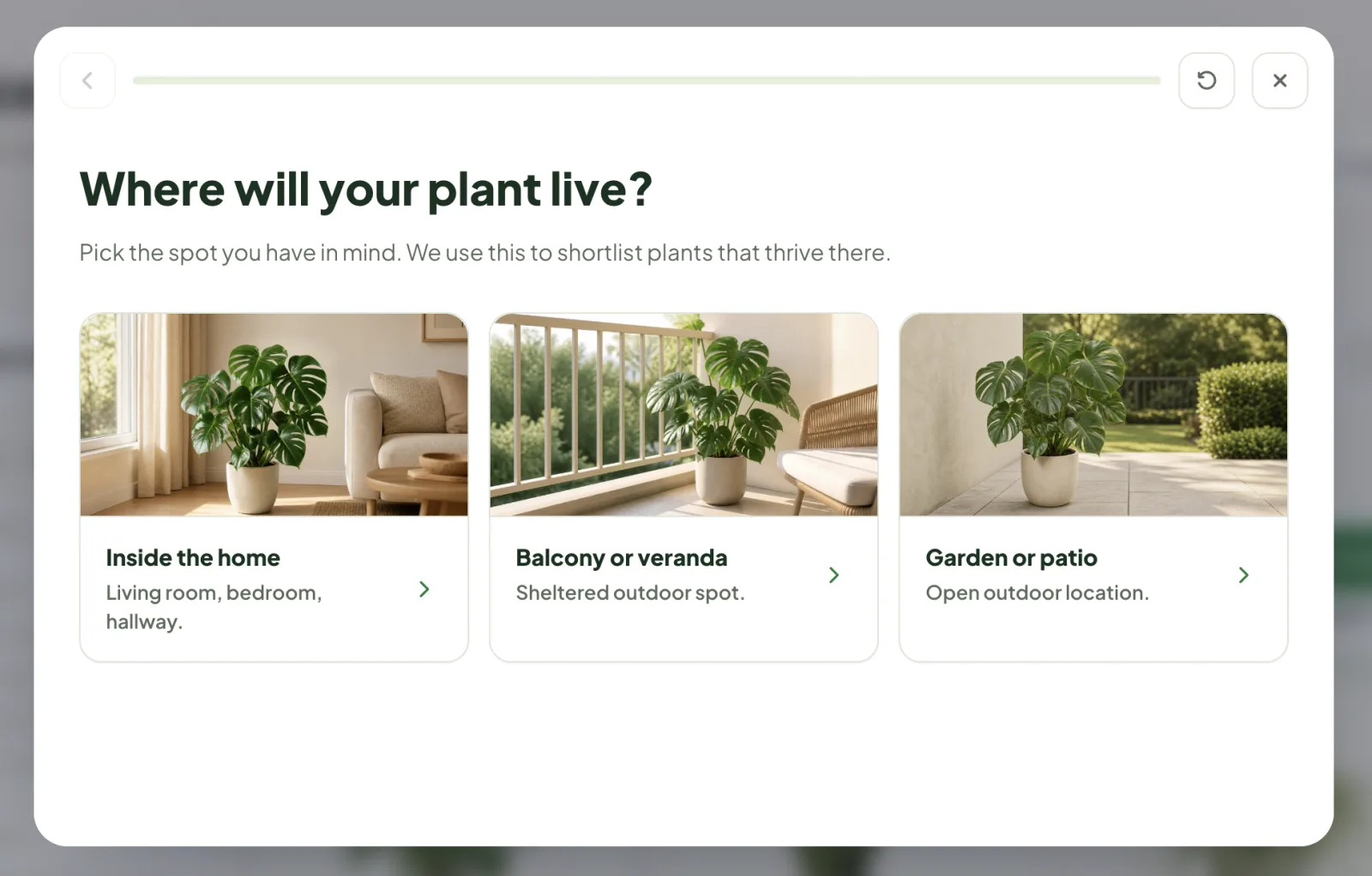
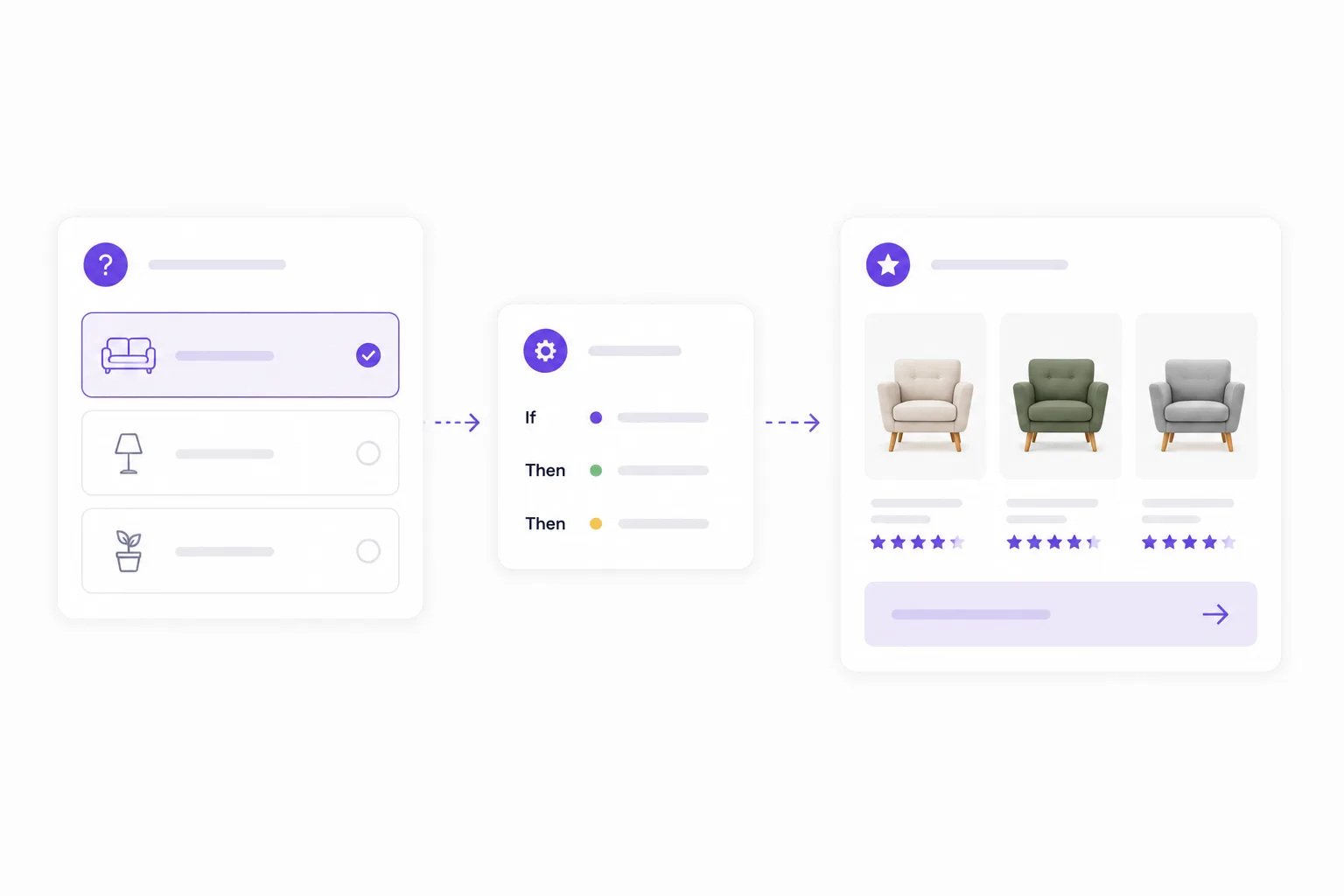
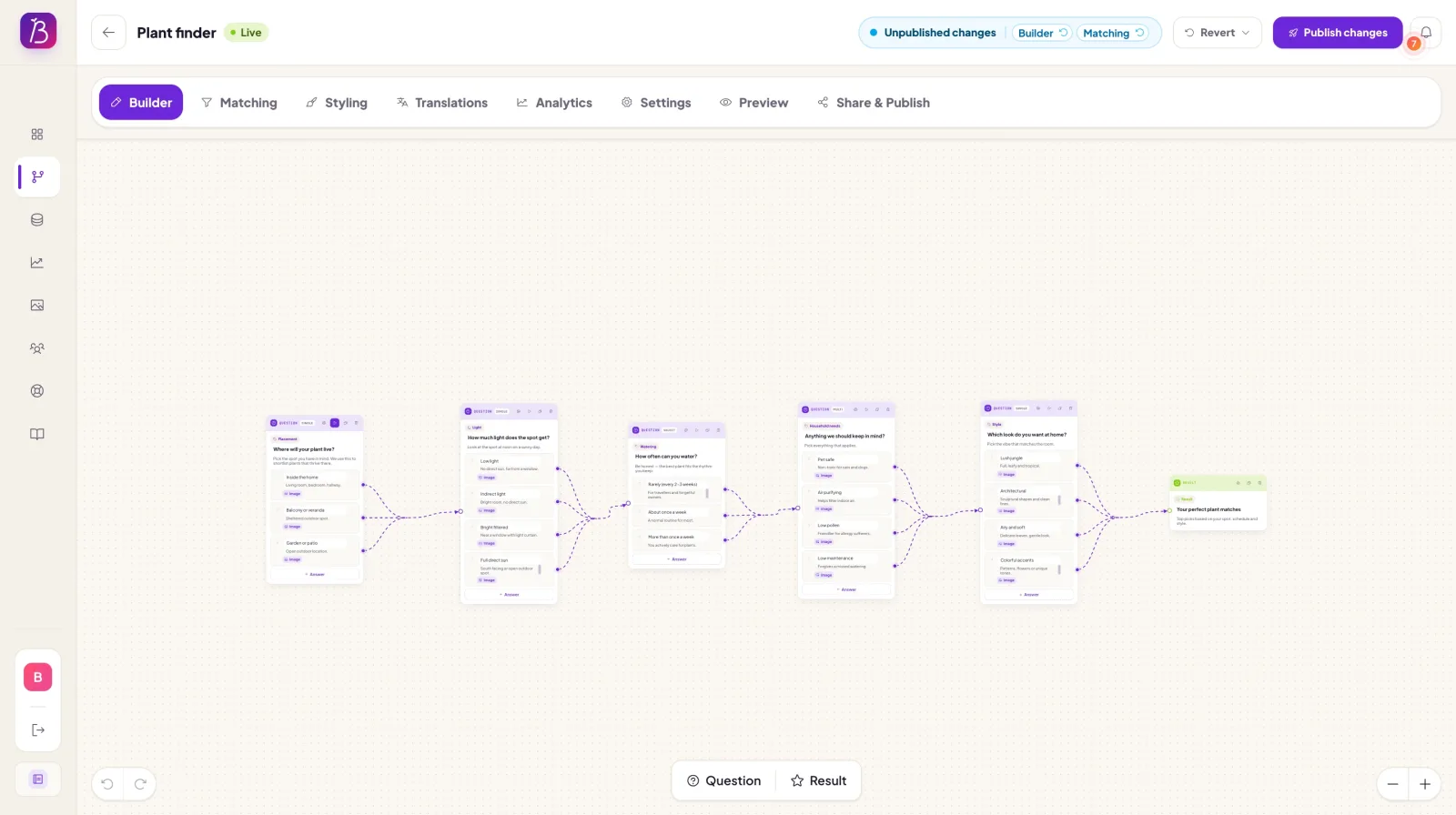
With BerryPath you build such a finder as an Advice Flow: a series of short questions that link answers to your product data. Check the demo to see how that feels in practice for a visitor.
What zero-party data do you collect with a product finder?
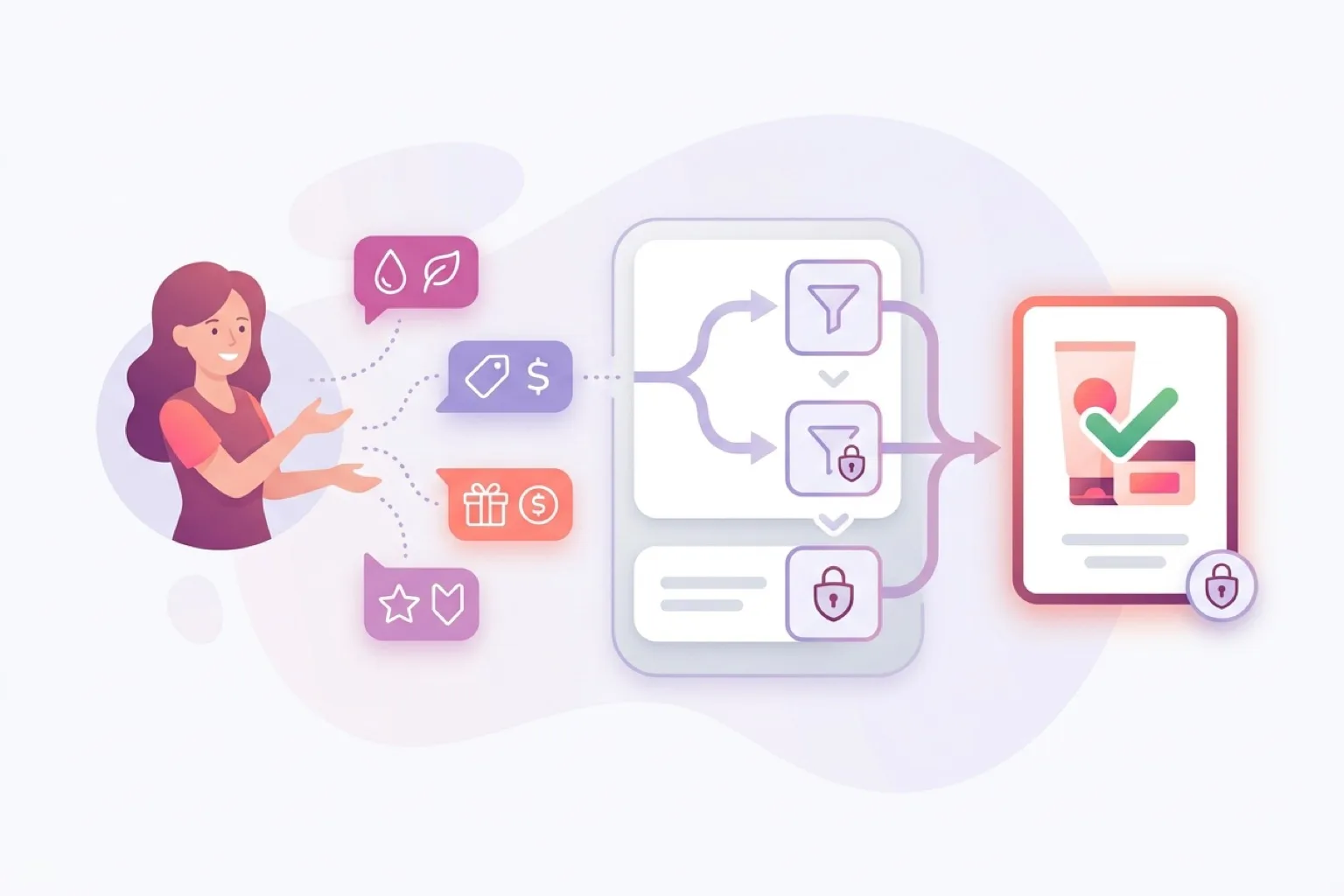
Do not start with the data, start with the choices your visitor makes. Every question that changes the recommendation yields usable zero-party data. Think of:
- Use case: what for, how often and in which environment is it used?
- Preferences: style, taste, brand, material or key properties.
- Budget: the price range the visitor wants to stay within.
- Experience level: beginner or advanced, affecting complexity.
- Intent: for themselves, as a gift, a replacement or a first purchase.
- Constraints: size, compatibility, allergy or space.
Keep it short. A finder of four to seven good questions yields more usable data than a long questionnaire people abandon halfway. Which questions have the most impact, you can read in product advice on product pages.
How to set up zero-party data collection
In a few steps you turn a product finder into a reliable source of zero-party data:
- Pick a category where visitors hesitate. That is where the value exchange is strongest, so people share most easily.
- Decide the questions that drive the recommendation. Every question must have a purpose: either it changes the advice, or it does not belong.
- Link answers to product data. Without good product data for matching, even perfect zero-party data goes unused.
- Always give something back. An explained recommendation, a shortlist or a fitting bundle. The exchange must feel genuinely fair.
- Capture the data in a structured way. Store answers as usable attributes, not loose text, so you can reuse them later.
Zero-party data and privacy: do it right
Zero-party data is privacy-friendly by nature, but only if you use it cleanly. A few principles:
- Ask only what you use. Data minimization is not a constraint, it makes your finder shorter and better.
- Make the value clear. The visitor should understand they answer questions for better advice, not for your database.
- Be transparent about reuse. If you want to use answers later for email or personalization, ask separate, honest consent for that.
- Avoid unnecessarily personal questions. Preferences and situation are fine, sensitive personal data rarely belongs in a finder.
Done well, zero-party data strengthens trust in your brand instead of eroding it. That is the exact opposite of tracking.
From zero-party data to better recommendations
Collecting is only half of it. The value appears when you let the data flow back into your advice and your assortment.
In the short term, zero-party data sharpens every recommendation: you match on what the customer truly wants, not on what you suspect. In the longer term, the aggregated answers reveal patterns: which use cases are common, which budgets are alive, and where your assortment has gaps.
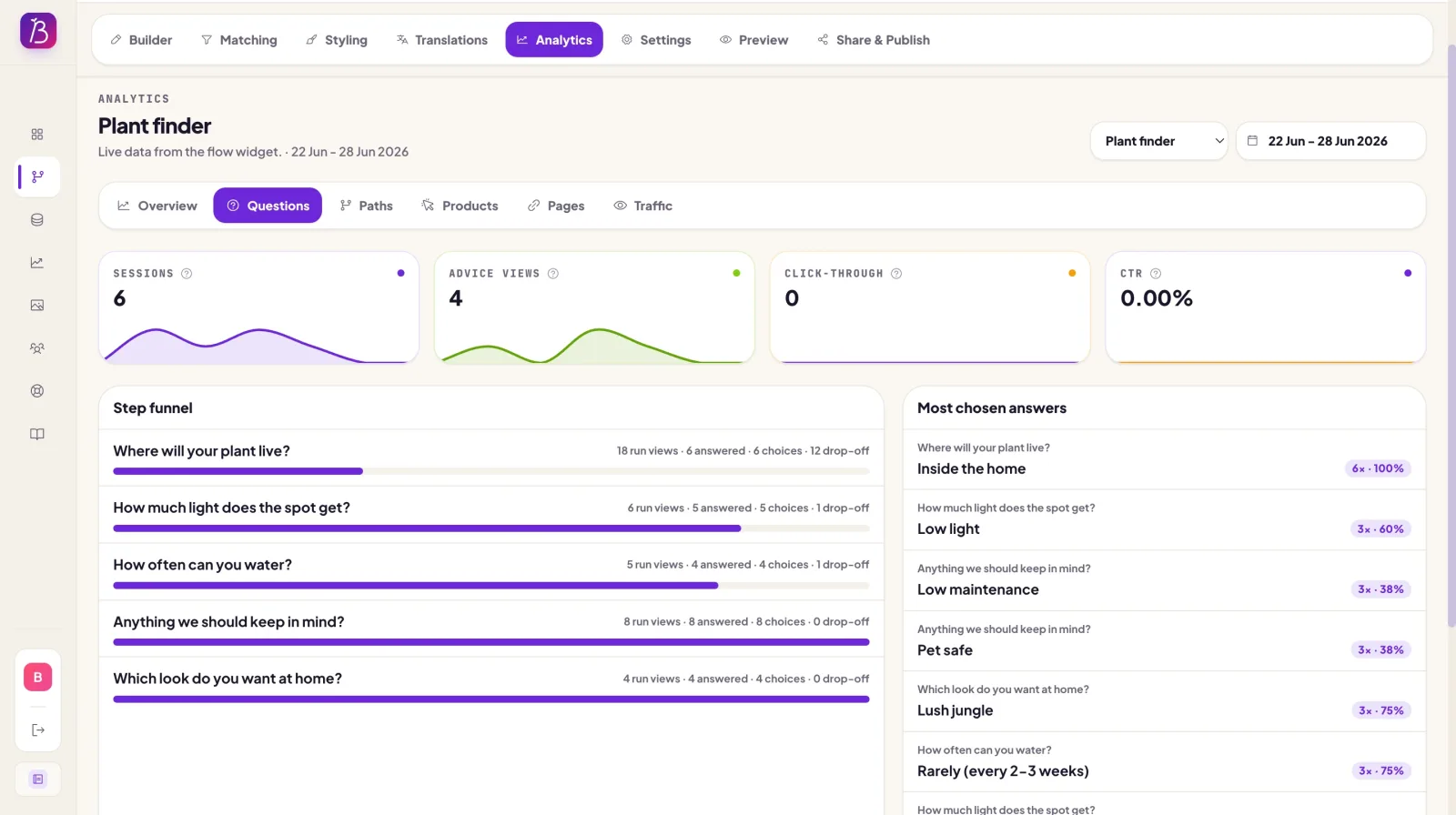
This makes your product finder more than a conversion tool. It is a continuous, privacy-friendly source of customer knowledge that makes your entire webshop smarter.
Frequently asked questions
Is zero-party data the same as first-party data?
No. First-party data you collect from behavior on your own site, such as clicks and purchases. Zero-party data the customer shares consciously and explicitly, such as preferences and intentions. That makes zero-party data more accurate and less prone to misinterpretation.
Do you need consent for zero-party data?
Because the customer shares the information themselves and voluntarily, the basis is often fine. Watch the purpose: if you want to reuse answers for, say, marketing or personalization beyond the direct advice, ask transparent separate consent for that.
Does this work without much traffic?
Yes. For better individual recommendations you do not need large numbers: every completed finder yields immediately usable data. For assortment-level patterns more traffic helps, but you get value from the very first visitors.
Which webshops benefit most?
Especially shops with choice-heavy products: beauty, supplements, electronics, parts, plants, sports and B2B assortments. Anywhere visitors hesitate, the trade of "a few questions for good advice" is strong.
What are examples of zero-party data?
Preferences (style, brand, taste), intent ("it's a gift"), requirements (budget, size, allergy), experience level and use context. In short: anything a customer tells you on purpose to get a better recommendation, rather than something you infer from their clicks.
How do you collect zero-party data?
The most natural way in a webshop is an interactive product finder or choice helper: the visitor answers a few short questions and gets a fitting recommendation in return. That fair exchange converts far better than a survey or a marketing form.
Start with your first product finder
Zero-party data is not a separate project, but a natural by-product of helping visitors choose well. Build a short product advice tool for your webshop, ask only what improves the advice, and you collect privacy-friendly customer knowledge from day one. Check the demo or read how to choose product finder software built for this.